
Employment & Labour Insights
What Kenyan employment law requires of employers and allows employees, from contracts and statutory deductions to work permits and termination. Grounded in the disputes we run and the workplaces we advise.

In brief Of all the questions an employment lawyer in Nairobi is asked, the commonest arrives within days of a dismissal and is admirably direct: how much would I actually get? The honest answer is more useful than the folklore, which has settled on the idea that an unfair dismissal is worth twelve months’ salary […]

By Peter Maina
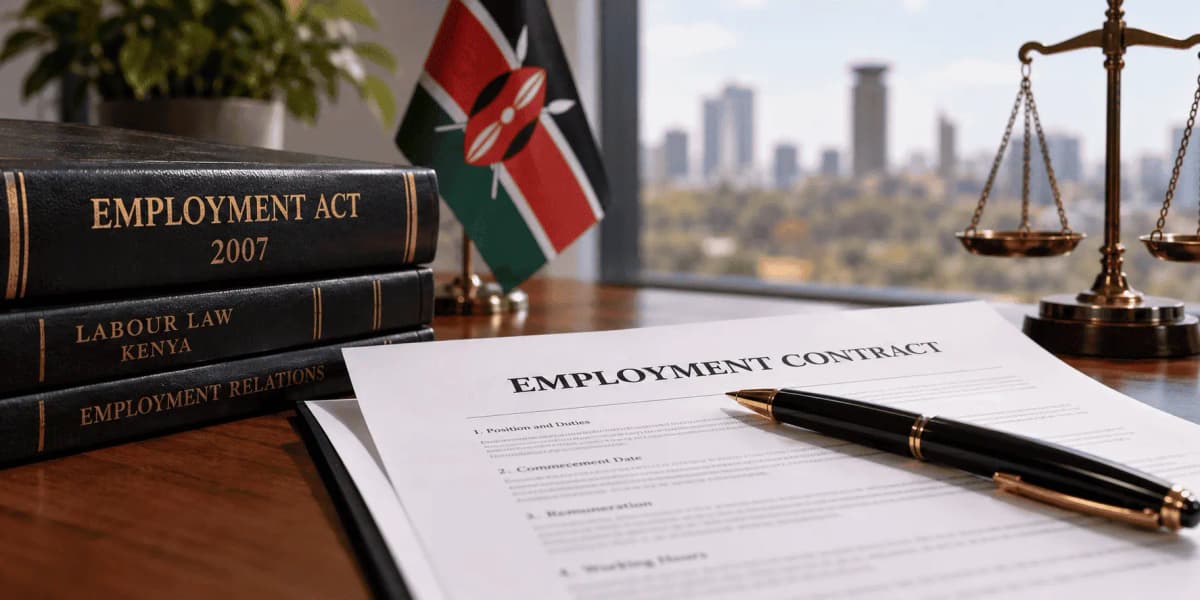
In brief The employment contract is the most consequential commercial document most Kenyan businesses sign, and the one they spend the least on. A supplier agreement worth two hundred thousand shillings gets a lawyer; the hire who will handle the company’s money, customers and secrets for years gets a template somebody found online. This guide […]
By Peter Maina

In brief Every month, millions of Kenyan payslips perform the same four subtractions, and remarkably few of the people on either side of them could say precisely what each one is, where it goes, or why the net figure is what it is. The answers are not trivia. An employer who gets the computation wrong […]
By Peter Maina

Synopsis No foreign national may work in Kenya without a permit or pass. Employees need a Class D work permit (KES 500,000 a year). Investors need Class G (minimum capital USD 100,000). Retirees and people of independent means use Class K. Remote workers now have Class N, the digital nomad permit (USD 1,000 a year). […]
By Peter Maina
Kenya employer statutory deductions have undergone significant reform as part of the government’s broader strategy to uphold the socio-economic rights guaranteed under Article 43 of the Constitution of Kenya. Through initiatives such as the Housing Levy, the Social Health Insurance Fund (SHIF), and the revamped National Social Security Fund (NSSF), the government aims to strengthen […]
By Editorial Desk