Dual citizenship, the ID, the KRA PIN and Ardhisasa: The order of operations for buying from abroad

28 October 2026By Peter Maina
Updated on 31 October 2026
In brief
- A Kenyan citizen by birth who takes up American, British or any other citizenship remains a Kenyan citizen under Article 16 of the Constitution, and buys land at home with a citizen’s full rights, freehold included. The one duty attached is to disclose the other citizenship within three months.
- A Kenyan who naturalised abroad before 27 August 2010 lost Kenyan citizenship under the old constitution and is, until it is regained, a non-citizen in law, limited by Article 65 to leasehold of at most ninety-nine years. Regaining is an entitlement, but it is not automatic, and buying in the gap means buying as a foreigner.
- The paperwork runs in one workable order. Citizenship first, then the ID or Kenyan passport, then the KRA PIN, then the Ardhisasa account, then the transaction, because each step is the key to the next and attempting them out of sequence is where applications stall.
Every week someone writes to us from Texas or Berkshire with a version of the same plan. They have found the plot, agreed the price and lined up the money, and they intend to sort out the paperwork of being Kenyan somewhere along the way. The plan fails politely and slowly, because the Kenyan system of land ownership sits on a chain of documents in which each link opens the next, and the chain begins with a question many people cannot answer offhand, which is whether, in law, they are still Kenyan at all. This article walks the chain in order, from citizenship through the national ID, the KRA PIN and Ardhisasa to the purchase itself, and explains what goes wrong when the steps are attempted backwards. It is written for the Kenyan abroad who holds a second passport or is about to, and for the family helping them transact at home.
Still a citizen, or not, and why 27 August 2010 is the date that decides
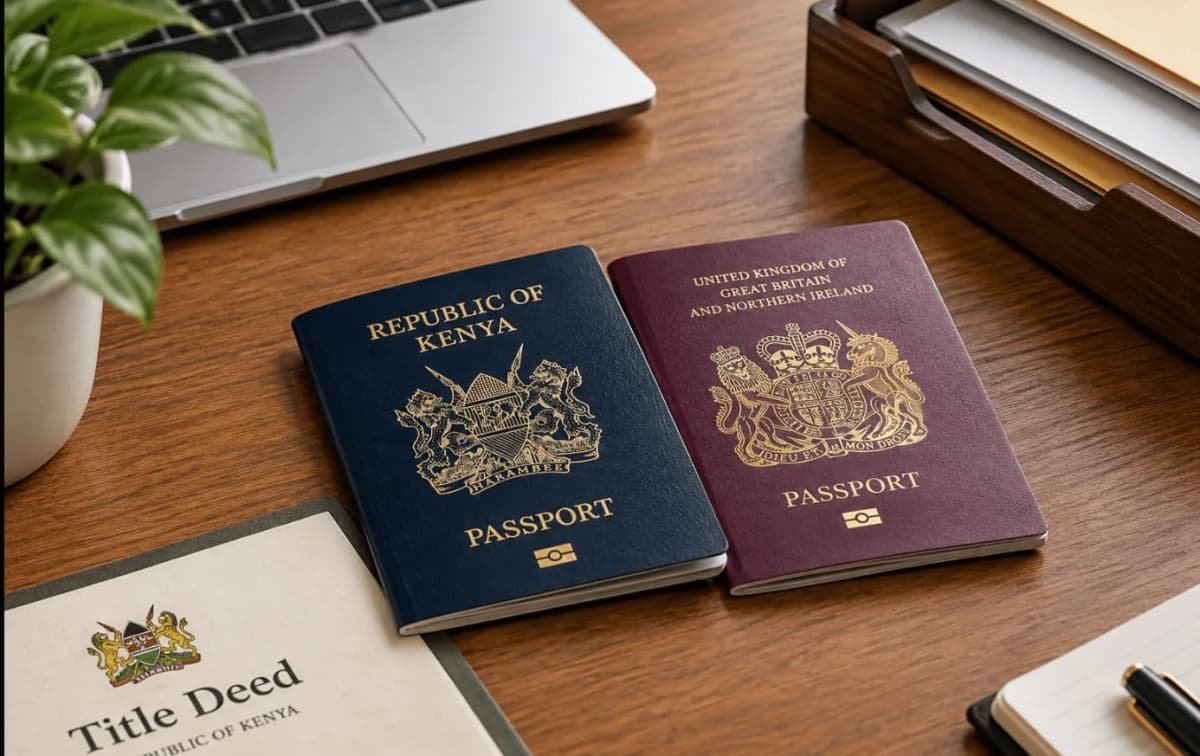
The Constitution settled the dual citizenship question in Kenya’s favour. Under Article 16, a citizen by birth does not lose Kenyan citizenship by acquiring the citizenship of another country, so the nurse in Dallas who naturalised in 2018 and the engineer in Manchester who took a British passport last year remain Kenyans, with everything that follows from it. The position is different for those who naturalised before the Constitution took effect on 27 August 2010, because the old law stripped citizenship on naturalisation, and the loss stands until it is reversed. Article 14(5) entitles such a person to regain citizenship on application under the Kenya Citizenship and Immigration Act, through the Directorate of Immigration or a Kenyan mission abroad, and the word entitled matters, since the state cannot refuse a qualifying applicant. What the entitlement does not do is operate by itself. Until the certificate is in hand, the applicant is a non-citizen, and the land consequences of that status are the subject of the next section. One housekeeping duty applies either way. Section 8(3) of the Act requires every dual citizen to disclose the other citizenship within three months of acquiring it. The criminal penalty that stood behind the duty was struck down as unconstitutional by the High Court in Ndegwa v Attorney General in 2024, but the duty itself survives, and a clean disclosure record keeps passports, IDs and applications consistent.
What Article 65 does to the buyer in the gap
Article 65 of the Constitution draws the line this whole article is really about. A non-citizen may hold land in Kenya only on leasehold, for a term of at most ninety-nine years, and any instrument that purports to give a non-citizen more takes effect as a ninety-nine year lease. A Kenyan citizen, including a dual citizen by birth, faces no such limit. So the buyer who lost citizenship by naturalising in 2005 and has not regained it is, for Article 65 purposes, in the same position as any foreigner, and the freehold plot bought in that gap is not freehold in their hands. The Article reaches further than individuals, and this is the trap that catches sophisticated buyers. A company is treated as a citizen only if it is wholly owned by citizens, so the family company with one non-citizen shareholder, a foreign spouse, a brother who naturalised before 2010, an investor from abroad, is a non-citizen body for Article 65, and it takes freehold land as a ninety-nine year lease however Kenyan everyone at the table feels. Property held in trust is looked through in the same way. None of this makes buying impossible, and for many purposes a ninety-nine year lease is a perfectly serviceable estate. What it punishes is ignorance of sequence, because the buyer who regains citizenship first buys as a citizen, and the one who buys first holds leasehold, with no way to rewind the transaction later.
The ID, the passport and the KRA PIN
With citizenship settled, the documents follow. For the land registry itself, the Land Registration Act asks for a copy of the national ID or passport together with the KRA PIN certificate and photographs, so a Kenyan abroad whose ID lapsed or was never issued can transact on a valid Kenyan passport while the ID is processed. The KRA PIN is the document no purchase escapes, because it is demanded at stamping, at registration and by every bank in the chain. For an individual Kenyan it is issued through KRA’s iTax portal keyed to the national ID, which is why the ID sits before the PIN in the order of operations, and a PIN that was issued years ago and has gone dormant should be reactivated before the transaction needs it rather than during. A non-citizen can obtain a PIN too, by a different route resting on immigration documents, which is how the purely foreign buyer in our guide to buying from abroad proceeds. The practical advice is unglamorous. Get the documents right while nothing is urgent, because every one of them takes days when nothing depends on it and weeks when everything does.
What Ardhisasa can and cannot do from abroad
Ardhisasa, the national land information system, is where searches, stamp duty and, in the counties already live on the platform, registration itself now happen. An individual account requires the national ID, the KRA PIN and an eCitizen profile, with verification messages sent to a Kenyan mobile line, and identity confirmed biometrically, which can be done at a Kenyan embassy or high commission offering consular services or at a Huduma Centre on a visit home. From abroad, a registered user can run an official search for KSh 1,000, inspect the title and its encumbrances, and pay stamp duty through the platform, and those three things alone have transformed what a diaspora buyer can verify without trusting anyone. What the platform does not yet offer everywhere is the transaction itself, since counties come live in phases and registries not yet live still require physical lodgement. The dependable route for the purchase is therefore the one this series has been assembling. An advocate on the Law Society register files through Ardhisasa in the live counties and lodges physically everywhere else, acting under a registered power of attorney, explained in our article on signing Kenyan documents from abroad, with the money held in an advocate’s client account, explained in our article on protecting your deposit. The buyer’s own Ardhisasa account is for verification and oversight, and the advocate’s standing is what moves the transaction.
The order of operations, stated once
Put together, the sequence is short enough to memorise and expensive to ignore. Settle citizenship first, which for the post-2010 dual citizen means disclosure and for the pre-2010 naturaliser means regaining it before signing anything. Then the ID or current Kenyan passport. Then the KRA PIN, issued or reactivated. Then the Ardhisasa and eCitizen accounts, with biometrics done at the nearest mission. Then, and only then, the transaction, run by an advocate under a registered power of attorney with the funds in a client account. A buyer who arrives at step five with steps one to four complete closes in the ordinary time of a Kenyan conveyance. A buyer who starts at step five discovers each missing document at the moment it blocks the next one, and the purchase that should have taken three months takes a year.
What happens next
Elsewhere in this series, our article on the diaspora landlord covers money moving the other way, the rent a Kenyan property earns while its owner lives abroad, and the section 6B tax that from 1 July 2026 changed how every non-resident landlord accounts to KRA. For citizenship, documentation and a purchase you want run in the right order from wherever you live, the place to start is a conversation.
Frequently asked questions
Can a dual citizen buy and own freehold land in Kenya?
Yes. A Kenyan citizen by birth who acquires another citizenship remains a Kenyan citizen under Article 16 of the Constitution and may own land, freehold included, like any other citizen. The ninety-nine year leasehold limit in Article 65 applies to non-citizens, not to dual citizens by birth.
I naturalised abroad before 2010. Am I still Kenyan?
No, not yet. Naturalising before 27 August 2010 cost you Kenyan citizenship under the old law, and until you regain it under Article 14(5) of the Constitution you are a non-citizen, able to hold land only on leasehold of up to ninety-nine years. Regaining is an entitlement on application, and the application belongs before the purchase, not after it.
Do I need a Kenyan ID to buy land?
Not necessarily, because the registry accepts the national ID or a Kenyan passport together with your KRA PIN. The ID matters indirectly, since an individual’s KRA PIN and Ardhisasa account are keyed to it, so a lapsed or missing ID is worth fixing early even where the passport carries the purchase.
Can I use Ardhisasa from abroad?
Partly. With an account, which requires a Kenyan ID, a KRA PIN and biometric verification available at Kenyan missions abroad, you can run official searches, inspect encumbrances and pay stamp duty from anywhere. Registration itself is live only in some counties, so the transaction is filed by your advocate, on the platform where it is live and physically where it is not.
Must I declare my dual citizenship, and what happens if I have not?
Yes. Section 8(3) of the Kenya Citizenship and Immigration Act requires disclosure within three months of acquiring the other citizenship. The criminal penalty behind the duty was struck down by the High Court in 2024, but the duty stands, and regularising a late disclosure is quick and keeps your passport, ID and land records consistent.
Peter Maina is a Partner of Peter Maina & Company Advocates. This article states the law as at 28 October 2026. It is general information, not legal advice. To regain citizenship, put your documents in order or run a purchase from abroad, reach out on e-mail peter@pmlaw.co.ke or WhatsApp +254 714 644 080.

Peter Maina
Peter Maina is an advocate of the High Court of Kenya and the founder of Peter Maina & Co Advocates, advising on Corporate and Commercial Law, Employment and Labour, Real Estate and Land, Banking and Finance, Capital Markets, Regulatory Compliance and Fintech, Corporate Governance, Private Wealth, Trusts & Estate Planning, and Dispute Resolution.
View Full Profile →Need Legal Assistance?
Whether you're dealing with corporate law, commercial disputes, or need professional legal advice, Peter Maina & Co Advocates is here to help.
How We Can HelpRelated Insights
View All Insights →
The diaspora landlord: How your Kenyan rent is taxed when you live abroad
In brief The flat in Kilimani that pays its own mortgage, the maisonette in Syokimau the family watches over, the apartment bought off plan and finally earning, each of them has a landlord abroad who has usually thought carefully about tenants and hardly at all about KRA. For years that inattention cost little, because enforcement […]

Kenya has no escrow law: What actually protects your deposit in a property purchase
In brief The question arrives in our inbox in almost the same words every month, usually from abroad. Is there a way to hold the money safely while the deal goes through? Behind it sits a sensible instinct. In the United States and the United Kingdom, a property deposit sits in escrow with a neutral […]

The Power of Attorney signed abroad: How a Kenyan land purchase is lawfully done from London, Dallas or Dubai
In brief Somewhere between the decision to buy and the day the money moves, every diaspora purchase of Kenyan land meets the same practical wall. Documents must be signed, searches commissioned, consents obtained and a transfer executed, and the buyer is in Dallas, London or Dubai with a job that does not pause for the […]