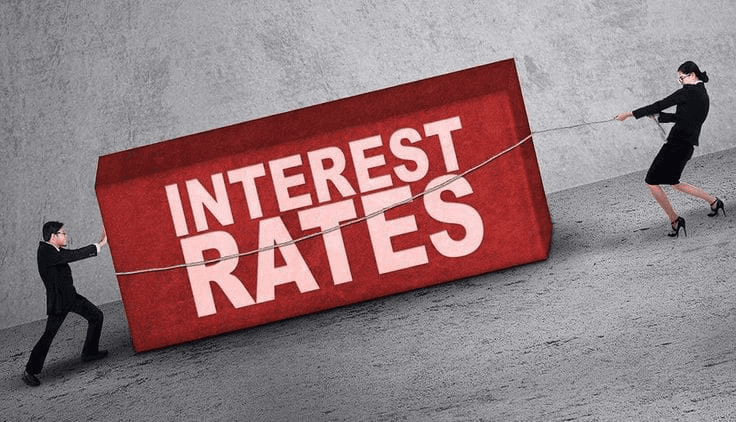
Should Interest Rates Be Regulated?

2 January 2026By Peter Maina
Updated on 15 September 2026
Interest rates in Kenya have been the subject of intense debate for more than two decades, dividing policymakers, economists, lenders, and consumers. While some argue that regulating lending rates protects borrowers from excessive charges and promotes financial inclusion, others maintain that interest rate controls distort the credit market, discourage lending, and ultimately reduce access to finance. The debate over interest rates in Kenya continues to shape the country’s banking sector, financial markets, and regulatory landscape.
This debate over interest rates in Kenya took center stage in 2016 when Kiambu Town Member of Parliament, Jude Njomo, introduced a private member’s bill in Parliament. This legislative move resulted in the insertion of Section 33B into the Banking Act, which imposed a cap on lending interest rates at four percentage points above the Central Bank of Kenya’s base rate. It also set a floor on deposit rates at 70% of the base rate, with stringent penalties for non-compliance, targeting CEOs of financial institutions who breached these regulations.
It can be contended that this amendment was largely politically driven, coming as it did during an electioneering period. The regulatory approach seemed to favor short-term political gains over a balanced financial strategy. Once the electoral dust had settled, the government, through the Finance Act, 2018, repealed the floor on deposit rates. The stated reason was to enhance access to credit and mitigate the negative impact of interest rate caps on credit growth and financial stability. These developments marked a significant turning point in the regulation of interest rates in Kenya.
The debate reached a climax in 2019 when a private citizen took the issue to court, challenging the constitutionality of the interest rate caps. On March 14th, 2019, the High Court in Nairobi declared Section 33B unconstitutional. However, recognizing the potential disruption to the financial sector, the court suspended the declaration for 12 months to allow Parliament time to review the legislation. It was a rare instance of judicial prudence, balancing the immediate need for regulatory correction with the potential chaos that could ensue in the financial markets. Parliament ultimately repealed Section 33B through the Finance Bill, 2019, preempting the court’s suspension period from lapsing.
Yet, despite the repeal, the discourse surrounding the regulation of interest rates in Kenya is far from settled. The underlying issues, namely consumer protection, financial inclusivity, and the role of regulation in a free-market economy, remain pertinent. As long as borrowers perceive interest rates as exorbitant and lenders see regulation as an infringement on market dynamics, the debate over interest rates in Kenya will continue to shape the country’s financial landscape for the foreseeable future.
It remains to be seen whether future legislative or judicial interventions will strike the right balance between consumer protection and market freedom. As the law governing interest rates in Kenya continues to evolve, businesses, lenders, borrowers, and investors should remain informed of legislative and judicial developments. We will continue to monitor these changes closely.
If you need legal assistance or advice relating to interest rates in Kenya, loan structuring, banking regulation, or any related matters, please feel free to reach out to us at peter@pmlaw.co.ke.
This article is intended for general information only and does not constitute legal advice. If you require legal advice on banking regulation, financial services, or commercial law in Kenya, please contact PMA Advocates for guidance tailored to your specific circumstances.
Looking for more legal updates? Visit our Legal Insights page for articles on banking and finance, AML compliance, corporate governance, employment law, immigration, dispute resolution, and other legal developments affecting businesses in Kenya.

Peter Maina
Peter Maina is an advocate of the High Court of Kenya and the founder of Peter Maina & Co Advocates, advising on Corporate and Commercial Law, Employment and Labour, Real Estate and Land, Banking and Finance, Capital Markets, Regulatory Compliance and Fintech, Corporate Governance, Private Wealth, Trusts & Estate Planning, and Dispute Resolution.
View Full Profile →Need Legal Assistance?
Whether you're dealing with corporate law, commercial disputes, or need professional legal advice, Peter Maina & Co Advocates is here to help.
How We Can HelpRelated Insights
View All Insights →
Redundancy in Kenya: How to Do It Lawfully, and What EveryDeclared Employee Is Owed
In brief Redundancy is where employment law meets arithmetic. A role is no longer needed, the business must shrink or reorganise, and the law does not stand in the way of either, because no statute obliges a Kenyan employer to keep paying for work that no longer exists. What the law does instead is prescribe […]

Compensation for Unfair Dismissal in Kenya: How Much Would You Actually Get?
In brief Of all the questions an employment lawyer in Nairobi is asked, the commonest arrives within days of a dismissal and is admirably direct: how much would I actually get? The honest answer is more useful than the folklore, which has settled on the idea that an unfair dismissal is worth twelve months’ salary […]
The Employment Contract in Kenya: What the Law Requires, What It Implies, and What a Well-Drafted One Adds
In brief The employment contract is the most consequential commercial document most Kenyan businesses sign, and the one they spend the least on. A supplier agreement worth two hundred thousand shillings gets a lawyer; the hire who will handle the company’s money, customers and secrets for years gets a template somebody found online. This guide […]